
If you are an athlete or someone who trains regularly, you’ve probably heard advice like “eat 2–3 servings of fruit a day.”
But what does one serving of fruit actually mean?
Is it one whole fruit?
A bowl?
A handful?
This is where confusion usually starts.
And for athletes, who rely on precise fuelling for performance and recovery, understanding servings becomes even more important.
This guide breaks it down in a simple, visual, and practical way so you always know what counts as one serving of fruit, how many servings you need daily, and easy ways to fit them into your diet.
Table of Contents
What Does One Serving of Fruit Actually Mean?
According to Dietary Guidelines for Indians by ICMR-NIN, one serving of fruit is equal to 100 grams (raw and edible part).
Think of one serving of fruit as:
- A way to standardize nutrition, not limit intake
- A tool to help you fuel performance consistently
For you as an athlete, this matters because fruit is a key source of:
- Carbohydrates
- Vitamins and minerals
- Hydration
- Antioxidants
In practical terms:
- Different fruits have different densities, water content, and sizes
- One fruit ≠ one serving (e.g., a large apple can be 1.5 servings)
Understanding this helps:
- Meet the daily recommended servings of fruits
- Plan pre-workout and post-workout nutrition
- Match fruit intake to training intensity
- Avoid overthinking portions and weighing every fruit
For example:
- Pre-workout: 1 serving of fruit = quick energy
- Post-workout: 1–2 servings = carb refill + antioxidants
- Moderate training day: 2-3 servings spread across meals throughout the day
- Heavy training day: 3–4 servings spread across meals throughout the day
Want to know what one serving means? Check my post: “Know The Difference: Serving, Serving Size, And Portion Size“.
Recommended Daily Fruit Servings
- General population: 1 serving of fruit daily (Dietary Guidelines for Indians)
- Athletes: 2–4 servings depending on training intensity
Visual Guide: What One Serving of Fruits Looks Like
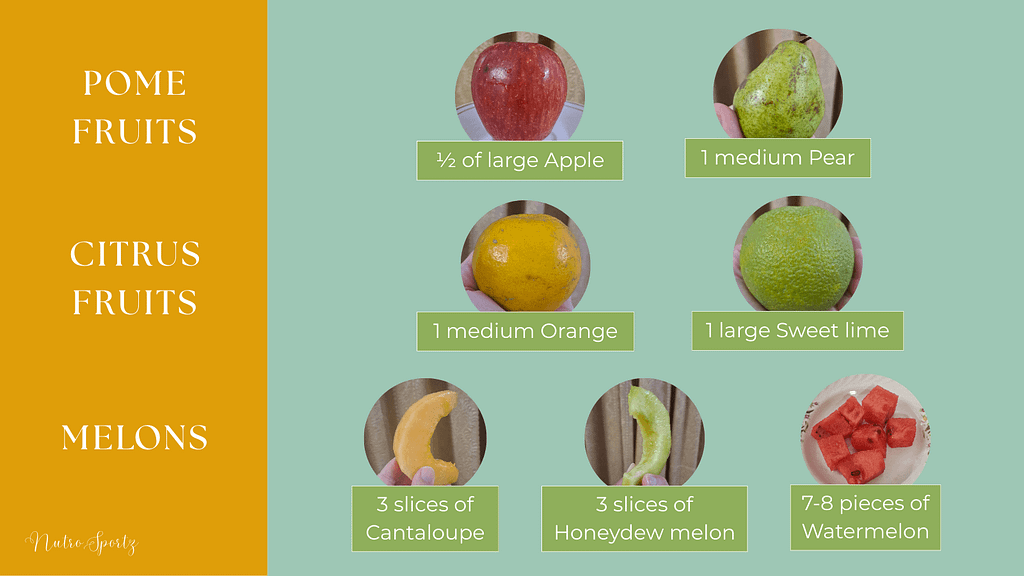
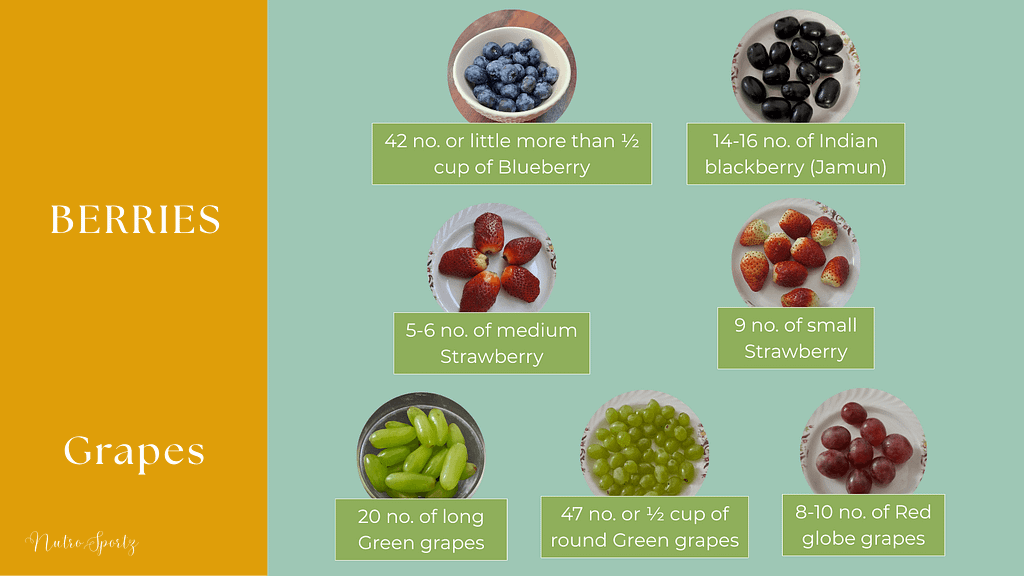
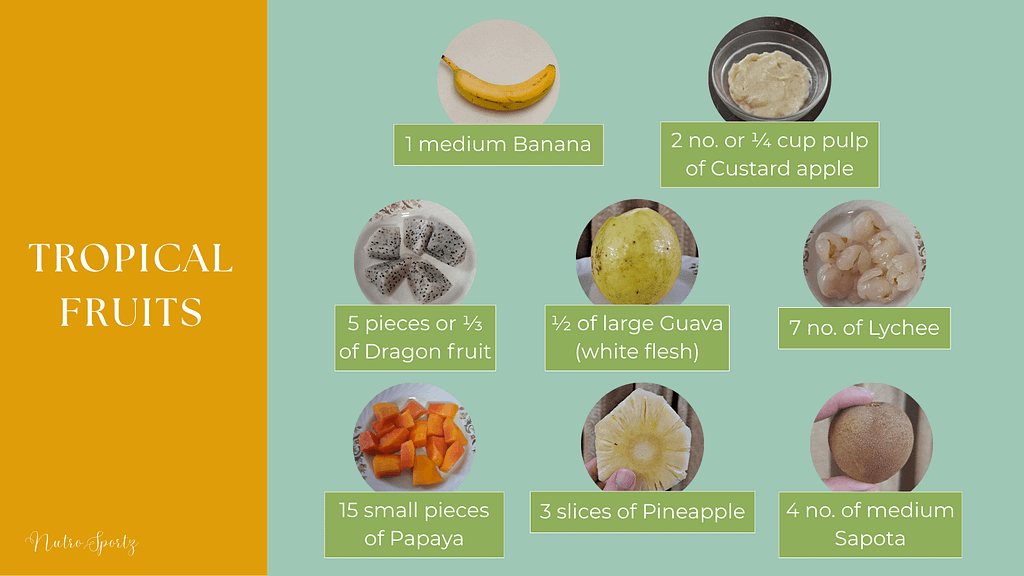
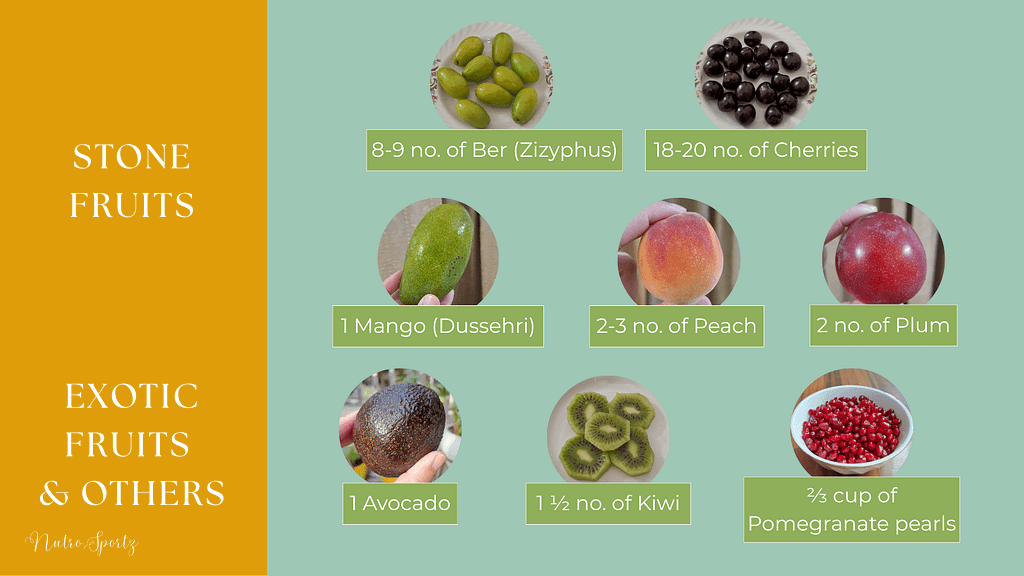
This section gives you an idea of what “One serving of fruit” looks like.
Peek Inside The Table: “One serving of fruit”
| Fruits | One serving (100 g) |
| Pome Fruits (Fruits with a core) | |
| Apple | ½ no. (large size) |
| Pear | 1 no. (medium size) |
| Citrus Fruits | |
| Orange | 1 no. (medium size) |
| Sweet lime | 1 no. (large size) |
| Melons | |
| Cantaloupe | 3 slices |
| Honeydew melon | 3 slices |
| Watermelon | 7-8 pieces |
| Berries | |
| Blueberry | 42 no. or little more than ½ cup |
| Indian blackberry (Jamun) | 14-16 no. |
| Strawberry (medium size) | 5-6 no. |
| Strawberry (small size) | 9 in no. |
| Grapes | |
| Green grapes (long) | 20 no. |
| Green grapes (round) | 47 no. or ½ cup |
| Red globe grapes | 8-10 no. |
| Tropical Fruits | |
| Banana | 1 no. (medium size) |
| Custard apple | 2 in no. or ¼ cup of pulp |
| Dragon fruit | ⅓ of a fruit or 5 pieces |
| Guava (white flesh) | ½ of a fruit (large size) |
| Lychee | 7 no. |
| Papaya | 15 pieces (small size) |
| Pineapple | 3 slices |
| Sapota | 4 no. (medium size) |
| Stone Fruits | |
| Cherries | 18-20 no. |
| Mango (Dussehri) | 1 no. |
| Peach | 2-3 no. |
| Plum | 2 no. |
| Zizyphus (Ber) | 8-9 no. |
| Exotic Fruits | |
| Avocado | 1 no. |
| Kiwi | 1 ½ no. |
| Others | |
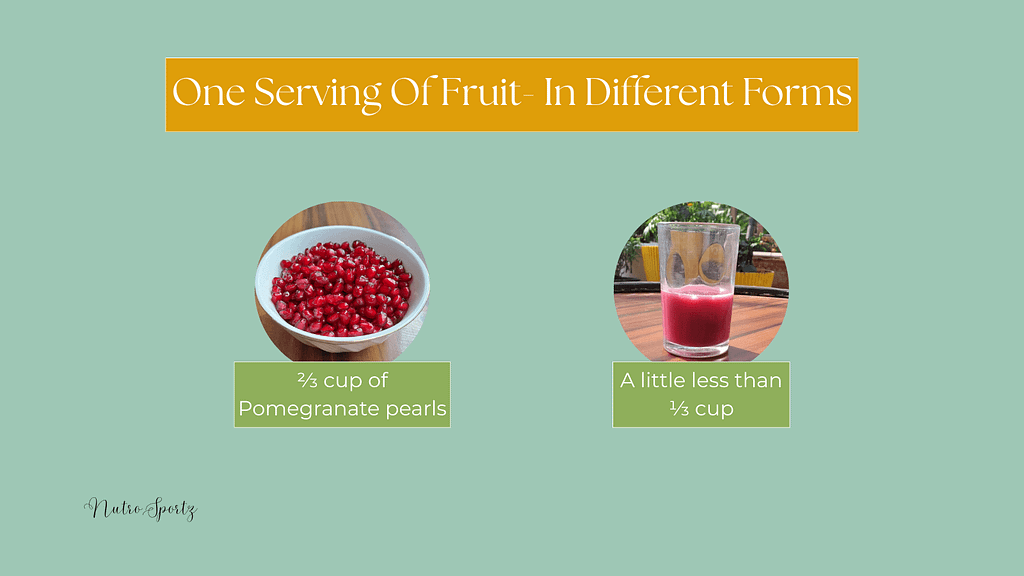
| Pomegranate | ⅔ cup of pomegranate pearls or a little less than ⅓ cup of fresh pomegranate juice |
Some Pointers
- The number of fruits used for fresh fruit juices depends on the water content of the fruit; therefore, the serving of that fruit will differ.
- Always choose fresh fruit juice over packaged, store-bought options. Most commercial juices contain minimal real fruit pulp and are largely made up of added sugars, so they shouldn’t be counted as a true fruit serving.
- Similarly, the serving of fruit used for making a smoothie or a shake depends on the amount of fruit used. Many smoothies use 2-3 servings of fruit.
infographics of how one serving of fruits look like
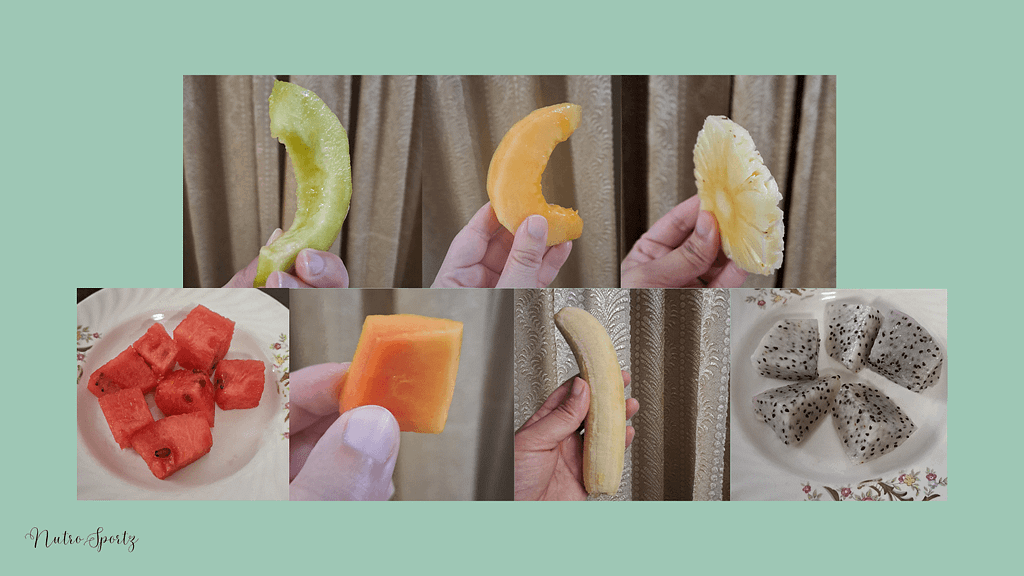
Size of fruit pieces used for standardization
Key Takeaway: You can eat more than one serving; what matters is knowing how many servings your portion contains.
Fruits ranked from lowest to highest in carbohydrates
Not all fruits provide the same amount of carbohydrates per serving. Knowing this helps you choose the right fruit for the right situation. Consider this table as a guide for fuel selection.
Peek inside the table: Fruits ranked from lowest to highest carbohydrates
| Fruits | Carbohydrate (g) |
| Avocado | 1.75 |
| Strawberry | 3.4 |
| Watermelon | 3.86 |
| Cantaloupe | 4.24 |
| Papaya | 4.61 |
| Guava (white flesh) | 5.13 |
| Sweet lime | 5.18 |
| Honeydew melon | 5.4 |
| Peach | 7.82 |
| Orange, pulp | 7.92 |
| Pear | 8.09 |
| Zizyphus (Ber) | 9.4 |
| Pineapple | 9.42 |
| Mango (avg.) | 10.0 |
| Indian blackberry (Jamun) | 10.64 |
| Lychee | 11.41 |
| Pomegranate | 11.58 |
| Green grapes (seedless) | 11.81 |
| Cherries | 11.87 |
| Plum | 12.1 |
| Red globe grapes | 12.55 |
| Dragon fruit | 13 .0 |
| Apple | 13.11 |
| Sapota | 13.9 |
| Blueberry | 14.5 |
| Kiwi | 14.66 |
| Custard apple | 20.38 |
| Banana | 23.63 |
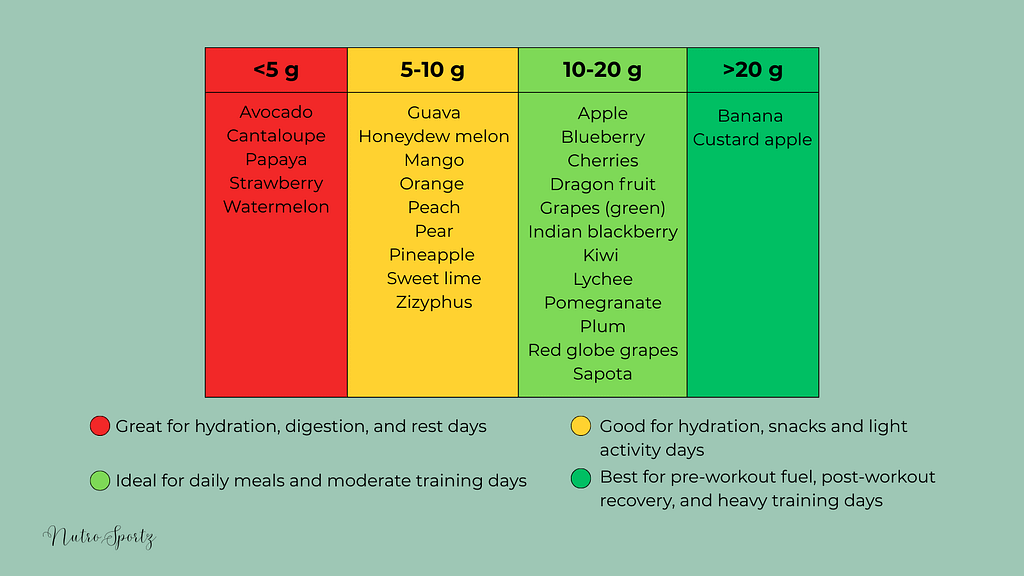
Key Takeaway: You don’t need to avoid low-carb fruits or chase high-carb ones – you match the fruit to your training demand.
How to Add Enough Fruit to Your Daily Diet
It is easier than you think, especially with small, smart additions.
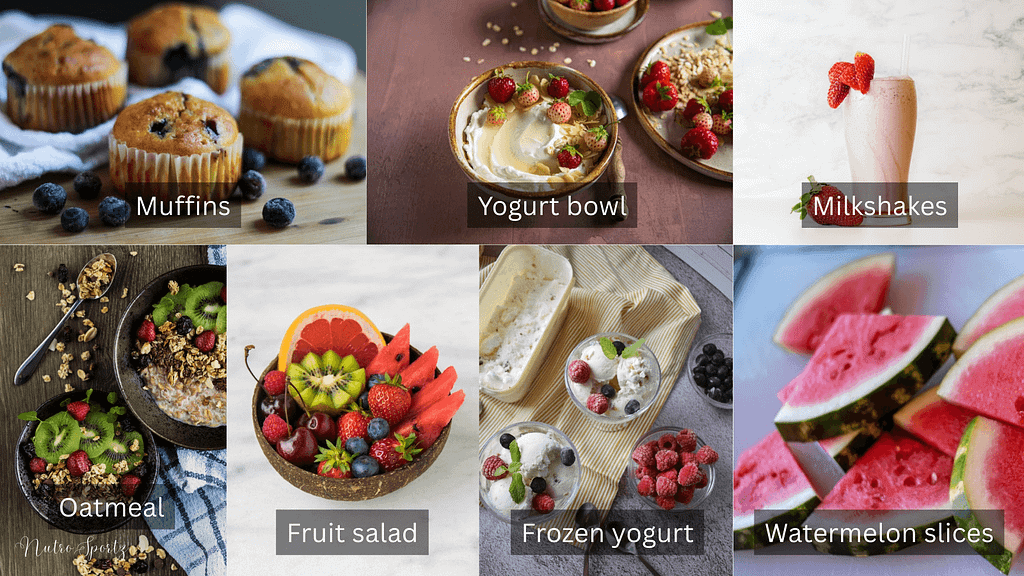
Breakfast
Add fruit to: oats, Greek yogurt, smoothies, and shakes.
Lunch
Add fruit to: yogurt, salads (avocado in quinoa salad, apple or pineapple in coleslaw).
Snacks
A handful of grapes, a small apple, or a mixed fruit bowl or salad.
Dinner
Add fruit to desserts.
Pre-workout
Eat bananas, grapes, mango slices, yogurt parfaits.
During training
Juices, watermelon slices.
Post-workout
Add fruit to: yogurt bowl, smoothies, shakes, muffins, frozen yogurt.
These options provide quick energy and help you hit your fruit goals without overthinking.
Want Some Recipe Inspiration?
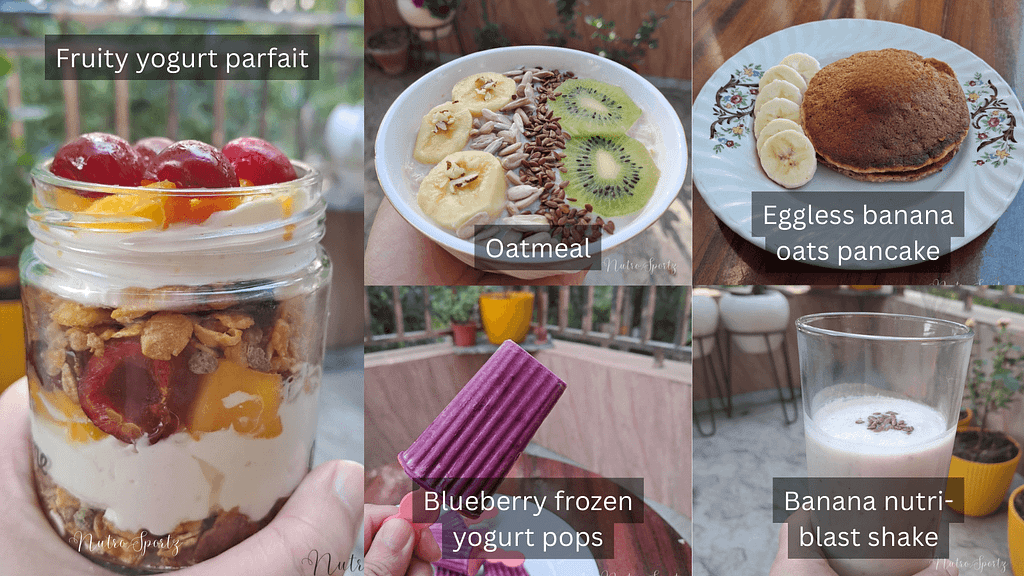
Here is a quick roundup of fruit-based recipes from my blog:
- Breakfast & post-training: Fruity yogurt parfait
- Breakfast: Oatmeal
- Breakfast & pre-training: Eggless banana oats pancake
- During & post-training: Blueberry frozen yogurt pops
- Post-training: Banana nutri-blast shake
Final Thoughts
Understanding what one serving of fruit means is not about restricting your intake; it is about getting clarity. Whether you are training hard, trying to eat healthier, or simply aiming for balanced nutrition, this simple visual guide helps you make informed choices without the guesswork.
With the visuals, recipes, and tips above, you can confidently meet your daily fruit needs and build a diet that supports both everyday wellness and athletic performance.
References
- ICMR-NIN Expert Committee (2011). Dietary guidelines for Indians. ICMR – National Institute of Nutrition.
- Longvah, T., Ananthan, R., Bhaskarachary, K., Venkaiah, K. (2017). Longvah, T. (Ed). Indian food composition tables. National Institute of Nutrition.
Time to wrap up
Before you go, drop a comment below👇!
Let me know which fruit you want me to add to the next version of the chart, or how you incorporate fruits into your daily diet. Your feedback helps shape future guides!