

Are carbohydrates helping your performance or holding you back? Carbohydrates are one of the most misunderstood nutrients. However, in reality, they are your body’s primary fuel source.
They don’t make you fat as you may think; what matters most is your total daily calorie intake. That said, consuming more than your body needs whether from carbohydrates, protein, or fat, adds to your total calories and may lead to weight gain.
In this guide, you’ll learn what carbohydrates are, their types, best sources, and how to use them effectively to support your training, recovery, and overall performance.
Table of Contents
What are Carbohydrates?
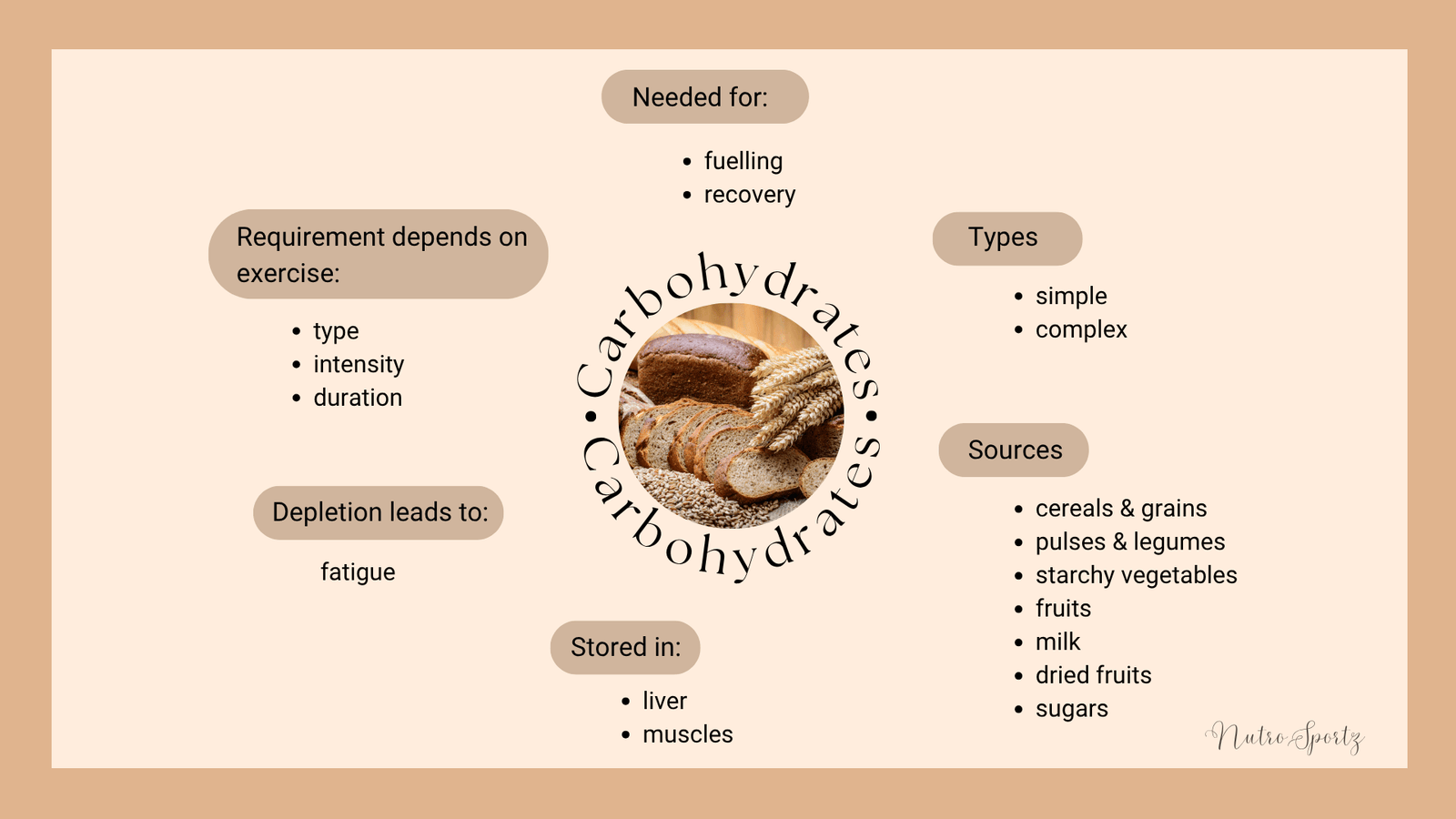
Carbohydrates are macronutrients (along with protein and fat), that are needed in larger amounts than micronutrients like vitamins and minerals. They supply energy to your muscles and brain.
When you eat food, carbohydrates present in food are converted into glucose. When glucose levels in your blood exceed energy demands, glucose is converted into glycogen and stored in the liver and muscles. This stored glycogen is later broken down into glucose in the liver and used by muscles during exercise to provide energy.
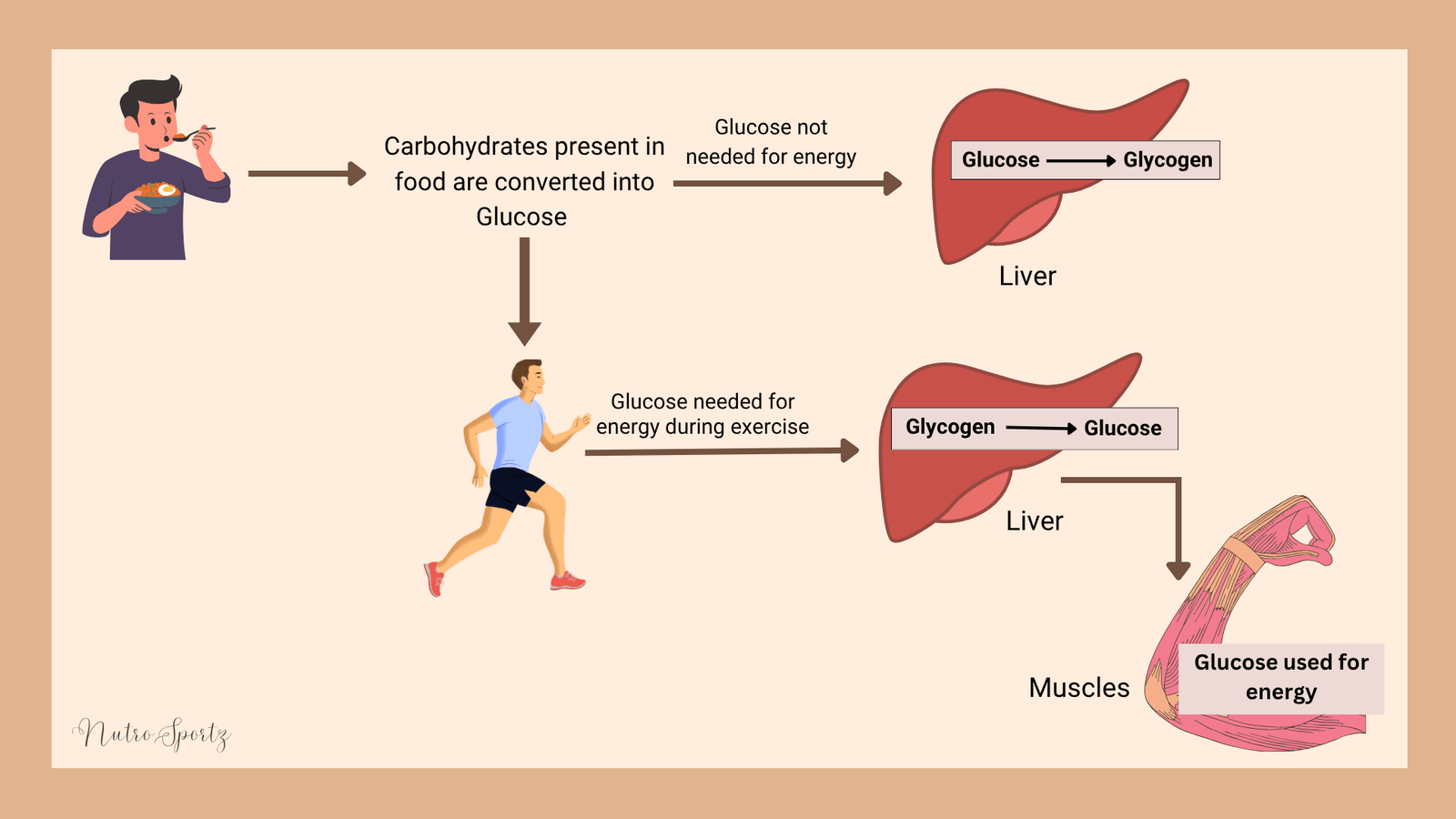
Key Takeaway: Your body runs on carbohydrates; treat them like a friend, not a foe.
How many types of Carbohydrates are there?
Carbohydrates are basically of two types:
- Simple
- Complex
Simple Carbohydrates
When you eat simple carbohydrates, they get digested quickly and give you energy rapidly.
When to eat: Best consumed as a pre-training snack when there is less than 30 minutes before exercise, during training, or as a post-training snack.
Complex carbohydrates
Complex carbohydrates are digested slowly and provide you consistent energy over a longer period.
When to eat: Best eaten as part of a pre- or post-training meal, or as a pre-training snack when there is more than 30 minutes before exercise.
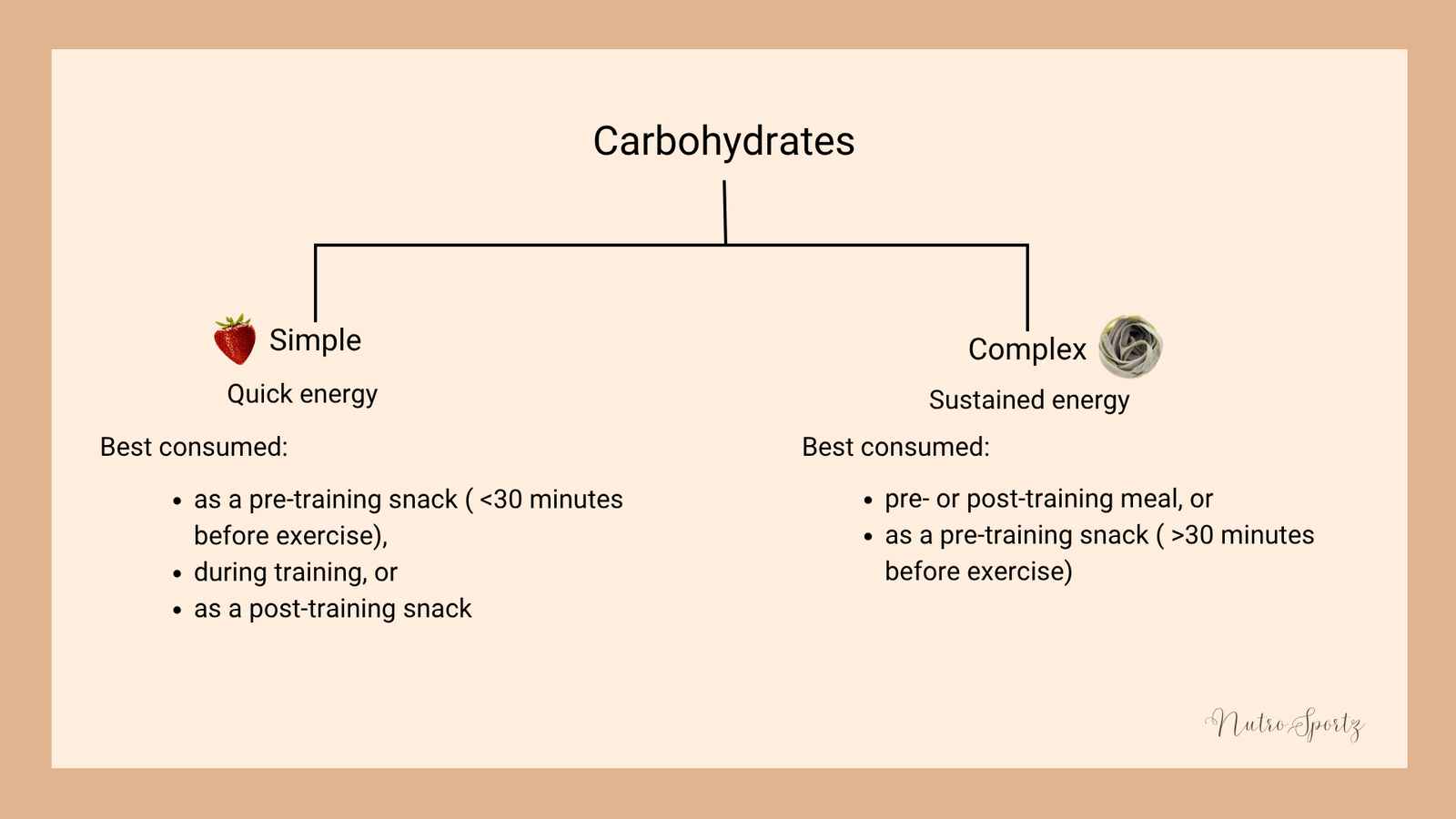
Key takeaway: Not all carbohydrates are the same. Choosing the right type of carbohydrates supports consistent energy levels.
Where to find carbohydrates?
Carbohydrates are found in a wide range of foods. Sources include grains (wheat, rice, quinoa), fruits, vegetables (potato, sweet potato, colocasia, corn), pulses & legumes, dairy (milk, curd), dried fruits, sugars, and fruit juices.
Other sources include foods like biscuits & cookies, bread, cakes & muffins, dark chocolate, energy bars, energy drinks, energy gels, frozen desserts (frozen yogurt, ice creams & ice slurries), glucose & electrolytes, and jellies. However, these sources are not the healthiest one and should not be consumed on regular basis and in unlimited amount.
Which Foods Are Simple or Complex Carbohydrates?
The type of carbohydrate in foods depends on their ingredients, fiber content, and level of processing. Complex carbohydrates are typically higher in fiber and less processed, while simple carbohydrates are lower in fiber and more processed.
| Food | Type of Carbohydrate |
| Biscuits & Cookies | Mostly simple (refined flour + sugar) |
| Bread | Depends (refined grain = simple, whole grain = complex) |
| Cakes & Muffins | Mostly simple (refined flour + sugar) |
| Cereals & grains | Complex (whole), (refined = faster-digesting) |
| Dark chocolate | Mostly simple |
| Dried fruits | Simple |
| Energy bars | Mixed (simple + complex, depends on ingredients) |
| Energy drinks | Simple |
| Energy gels | Simple |
| Frozen desserts | Simple |
| Fruits & juices | Simple |
| Glucose & electrolytes | Simple |
| Jellies | Simple |
| Milk | Simple |
| Pulses & legumes | Complex |
| Sugars | Simple |
| Sweets | Simple |
| Starchy vegetables | Complex |
Important: The type of carbohydrate present in foods like biscuits, cookies, cakes, and muffins depends on their ingredients. Those made with refined flour and sugar act as simple carbohydrates, while versions made with whole grains and less sugar provide more sustained energy.
Sources of carbohydrates from highest to lowest
Carbohydrate sources vary in their content, with some foods providing higher amounts per serving than others. Understanding this order can help you plan your meals to meet your energy and performance needs effectively.
Below is an infographic showing lists of carbohydrate sources arranged from highest to lowest carbohydrate content per 100 g of food.
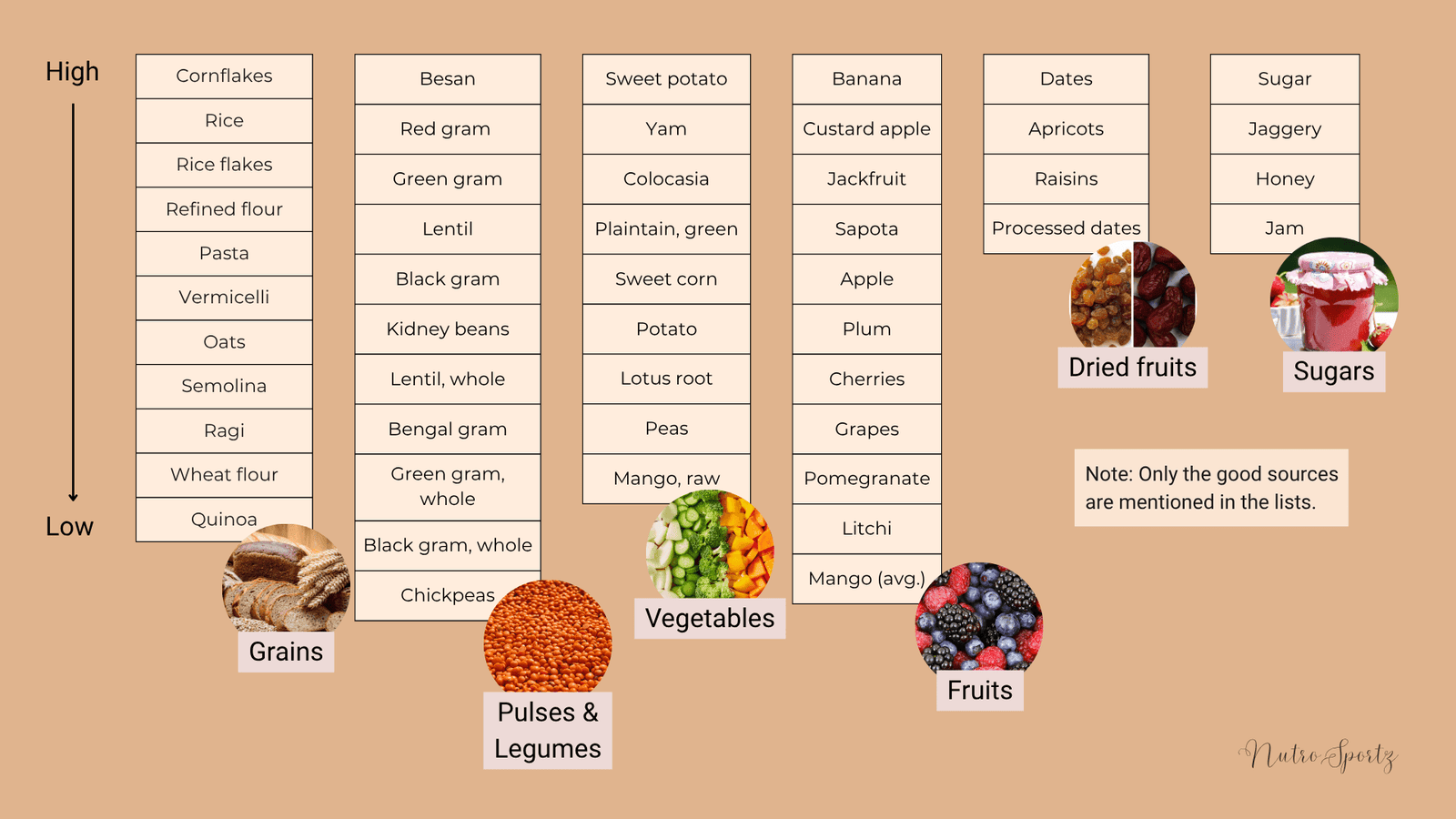
Important: Almost all foods provide carbohydrates, except non-vegetarian foods and oils; however, only the good sources are mentioned above.
Worth knowing: Black grapes contain more carbohydrates than other grape varieties, while among mangoes, Kesar has the highest carbohydrate content and Banganapalli the lowest.
Want to know the carbohydrate content of other fruits? Check my post: “One Serving Of Fruit: A Simple Visual Guide“.
Why do you need carbohydrates?
Your body gets energy from carbohydrates, protein, and fats in the diet. Carbohydrates are the primary fuel during intense exercise. However, this storage is limited, and when it runs out, fatigue sets in, often forcing you to stop.
When consumed in the right amounts and at the optimal times, carbohydrates can boost performance and fasten recovery, making them a vital macronutrient.
Key takeaway: Glycogen stores fuel exercise but are limited.
How much carbohydrates do you need?
The daily carbohydrate requirement varies based on exercise intensity and duration. As exercise intensity increases, the amount of carbohydrates needed also increases. The goal is to consume enough carbohydrates to fuel the muscles, support the central nervous system, and sustain other vital bodily functions.
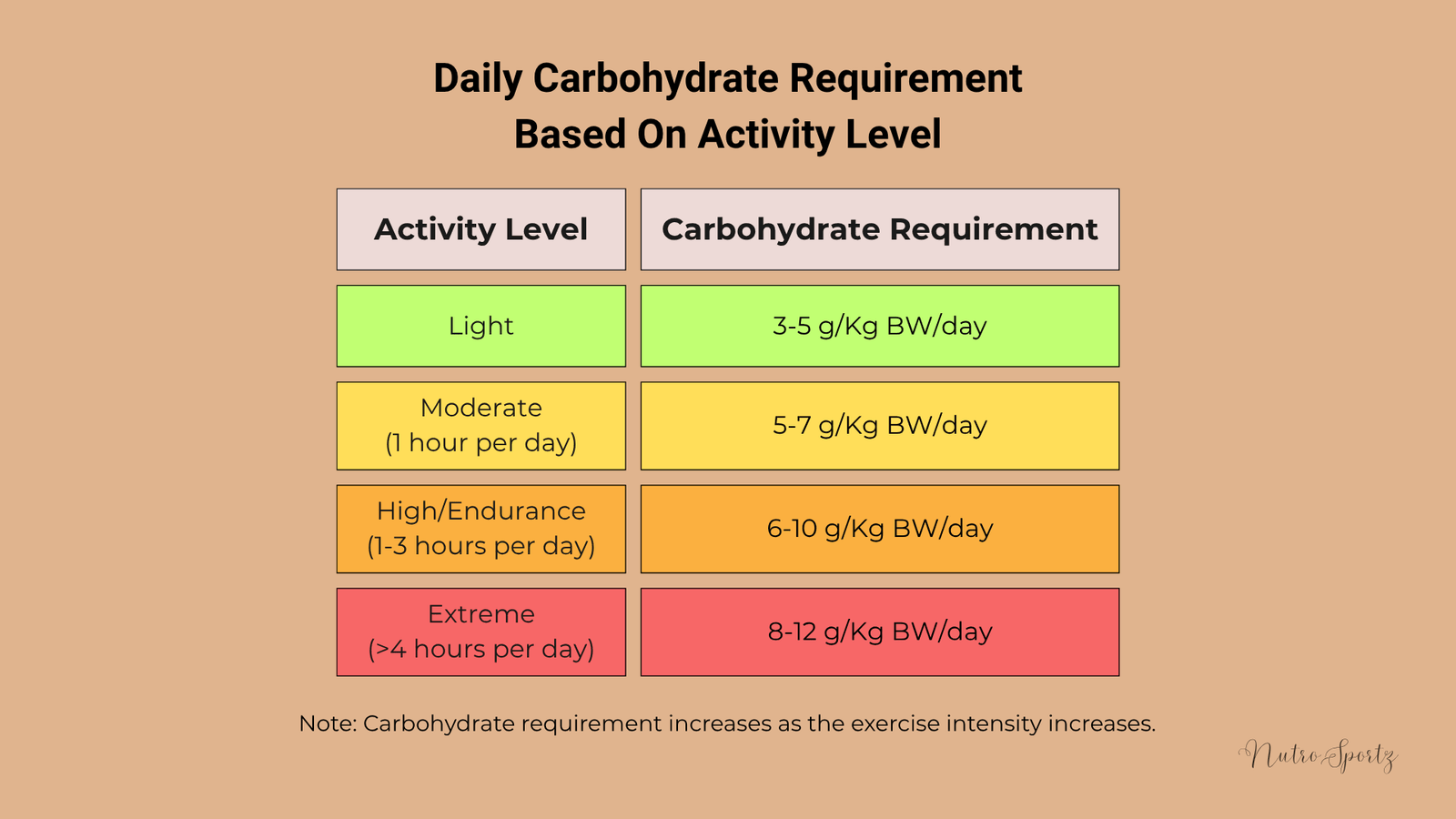
Using the table above, let’s figure out how many carbohydrates you need. If you weigh 55 kg and your exercise intensity and duration suggest a carbohydrate requirement of 8 g/ Kg BW/ day, your total daily carbohydrate intake would be 440 grams (calculated as 8 × 55 = 440 g).
Key takeaway: Carbohydrate needs vary based on activity level, duration, and intensity.
Carbohydrates at a Glance
final thoughts
Carbohydrates are the body’s primary fuel and play a crucial role in performance, recovery, and overall health. Rather than avoiding them, focusing on the right type and portions is key. Since requirements vary based on activity level, consuming the right amount helps maintain performance and delay fatigue. Choosing whole, minimally processed sources ensures better nutrition and consistent energy levels.
Want to learn how to portion your food to meet your carbohydrate requirements? Check my post: “How to Portion Your Food to Get 30 Grams of Carbohydrates“.
frequently asked questions
What are carbohydrates?
Carbohydrates are one of the three main macronutrients, along with protein and fat. They provide energy for the daily activities.
Are carbohydrates bad?
No, carbohydrates are not inherently bad. Carbohydrate sources like fruits, vegetables, and whole grains, milk provide essential nutrients and energy.
What is the difference between simple and complex carbohydrates?
Simple carbohydrates are digested quickly and provide rapid energy, while complex carbohydrates are digested more slowly and provide sustained energy.
Why should you eat Carbohydrates?
Carbohydrates are the main source of energy. They provide you fuel during exercise and helps in recovery from the training.
How many carbohydrates should you eat daily?
Carbohydrate needs vary based on activity level. Athletes or highly active individuals require higher amounts.
When should you eat carbohydrates around training?
Simple carbohydrates are best consumed as a snack before, during, or after training for quick energy. Complex carbohydrates are better suited for meals before or after training to provide sustained energy.
Do carbohydrates cause weight gain?
Carbohydrates do not directly cause weight gain. Consuming more calories than your body needs regardless of whether they come from carbohydrates, protein, or fat can lead to weight gain.
What are healthy sources of carbohydrates?
Healthy sources include grains, fruits, vegetables, pulses & legumes, dried fruits, and dairy products. These provide fiber, vitamins, and minerals along with energy.
References
- Longvah, T., Ananthan, R., Bhaskarachary, K., Venkaiah, K. (2017). Longvah, T. (Ed). Indian food composition tables. National Institute of Nutrition.
- Sport and exercise nutrition. (2011). Lanham-New, S., Stear, S., Shireffs, S., & Collins, A. (Eds.). The Nutrition Society Textbook Series. Wiley-Blackwell.
- Stein, K., Baker, L., Rollo, I., & Bailey, S. The female athlete: Sports nutrition and hydration resources for practitioners. Gatorade Sports Science Institute. (pp. 4-9).
time to wrap up
Have a question about carbohydrates or how to include them in your routine? Drop it in the comments below, I’d love to help.