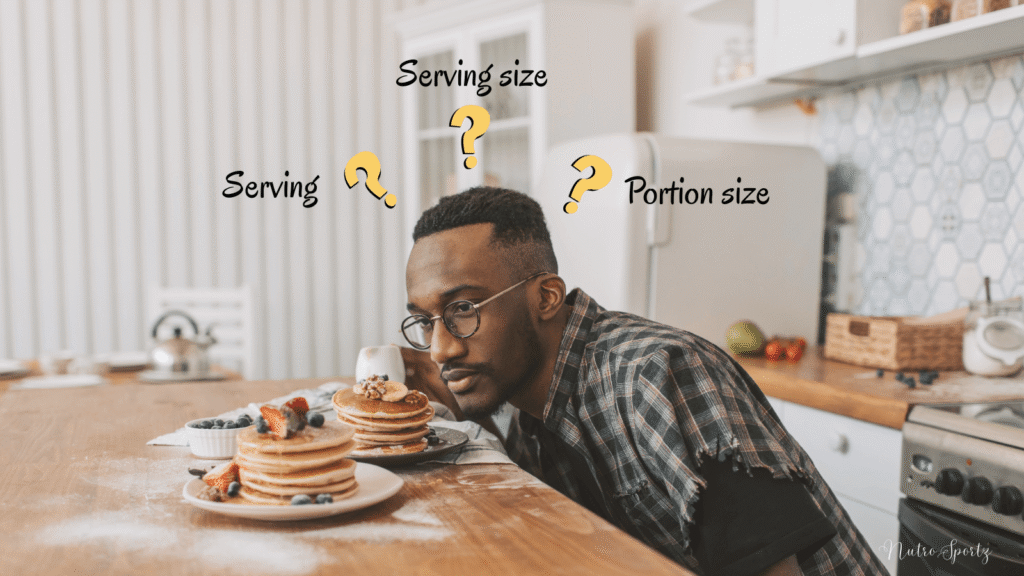

You’ve probably come across terms like serving, serving size, and portion size on nutrition labels, in health advice, or while following a recipe.
Do they all mean the same thing?
Short answer: NO.
There is no single, universal definition, which is why these terms can feel tricky. But don’t you worry; once you understand the basic idea behind each one, everything will start to make sense.
In this post, we will learn how serving, serving size, and portion size differ, without any confusion.
Table of Contents
Understanding serving, serving size, and portion size
Serving
Let’s see what it means in different contexts.
Dietary Guidelines: One serving is a reference amount of food (raw) used to estimate the number of calories and nutrients, including carbohydrates, protein, fats, vitamins, minerals, and fiber you get from eating one serving of that food.
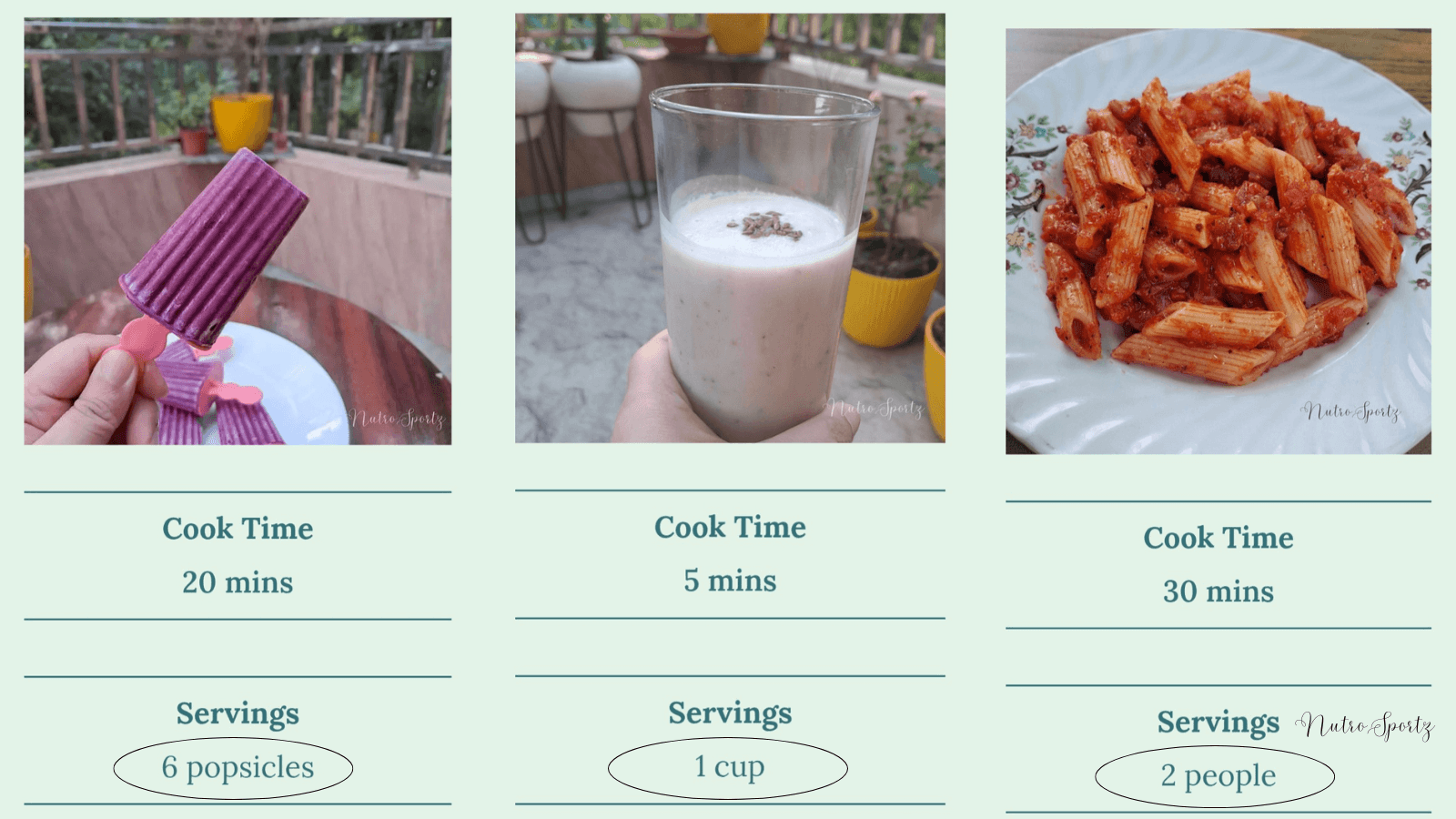
Recipes: In recipes, the word “servings” means:
- How many people the recipe can serve, or
- How much food the recipe makes
This is often expressed as:
- Cups
- Glasses
- Slices
- Number of portions
For example, a recipe may say “Serves: 2” or “Makes: 1 cup or 3 slices”. This tells only about the quantity.
Serving Size
The term serving size explains how much food equals one serving.
For example:
1 serving of vegetable (raw) = 100 g
Here, 100 g is the serving size.
The serving size indicates the number of grams that make up one serving.
Think of 1 Serving Like 1 Set in Training
As an athlete, you know reps and sets. Think of 1 serving the same way.
- 1 set = 12 reps
- 12 reps = the size of that set
Likewise,
- 1 serving of vegetables (raw) = 100 g
- 100 g of vegetable = the size of that serving
The meaning of serving size differs in different contexts. Let’s see how.
Dietary guidelines: Serving sizes are defined for each food group. These standard amounts help you plan a balanced diet across food groups. You can find these serving sizes in the official dietary guidelines of your country.
Food Serving Sizes Chart
Below are the serving sizes provided by the Dietary Guidelines for Indians for each food group.
| Food Groups | Serving Size (g/ ml) |
| Cereals & millets | 30 |
| Pulses | 30 |
| Egg | 50 |
| Meat/ Chicken/ Fish | 50 |
| Milk & milk products | 100 |
| Roots & tubers | 100 |
| Green leafy vegetables | 100 |
| Other vegetables | 100 |
| Fruits | 100 |
| Sugar | 5 |
| Fats & oils (visible) | 5 |
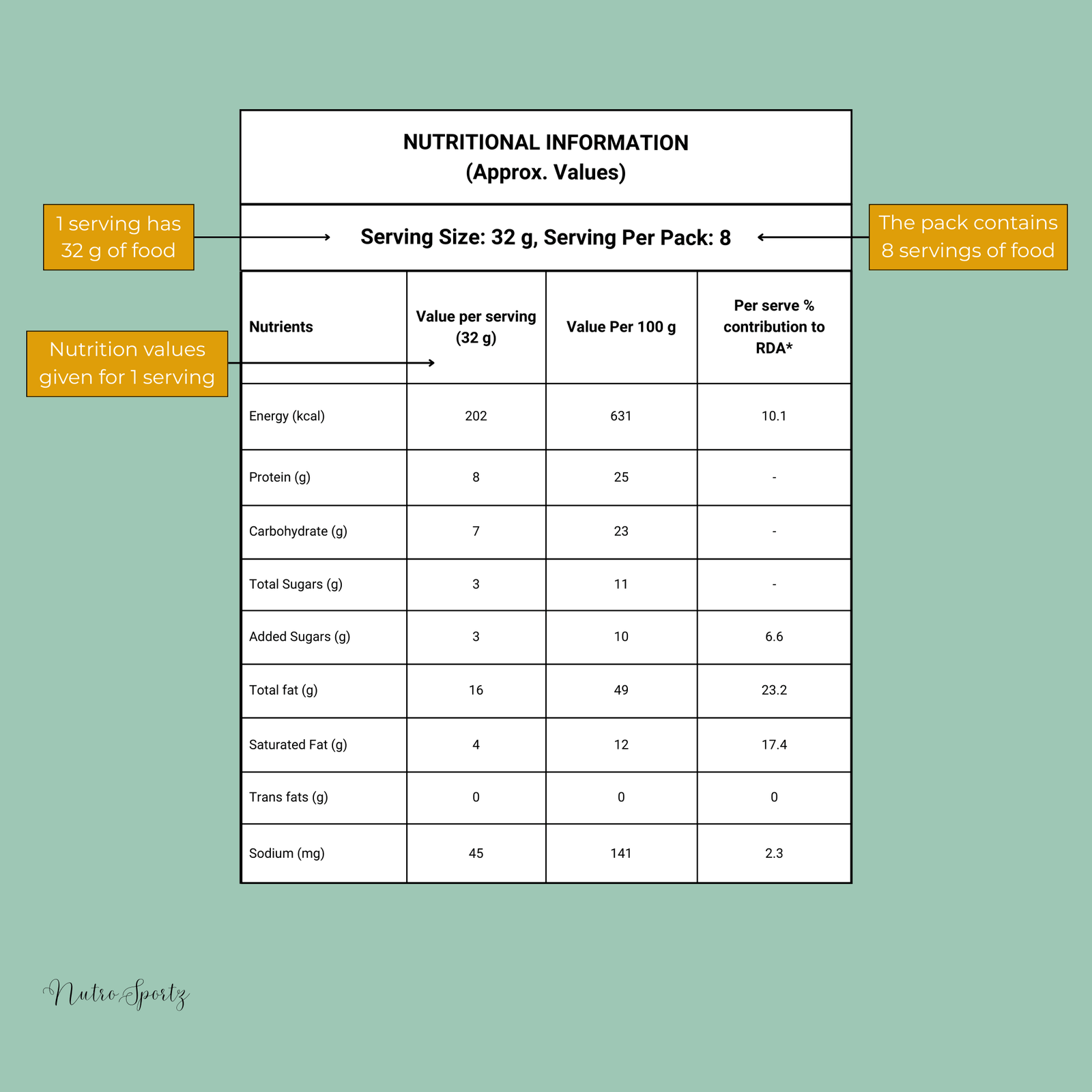
Nutrition labels: On packaged foods, the serving size refers to the amount on which the nutrition information of that food is based.
Portion size
A portion size is the amount of food you actually eat. Your portion size can be smaller, equal, or larger than a serving.
Let’s try to understand using the previous example.
- 1 serving of vegetables (raw) = 100 g (serving size)
- You eat 50 g of cucumber
- Your portion size = 50 g, which equals ½ serving of cucumber
Just like:
- 12 reps = 1 set
- 6 reps = ½ set
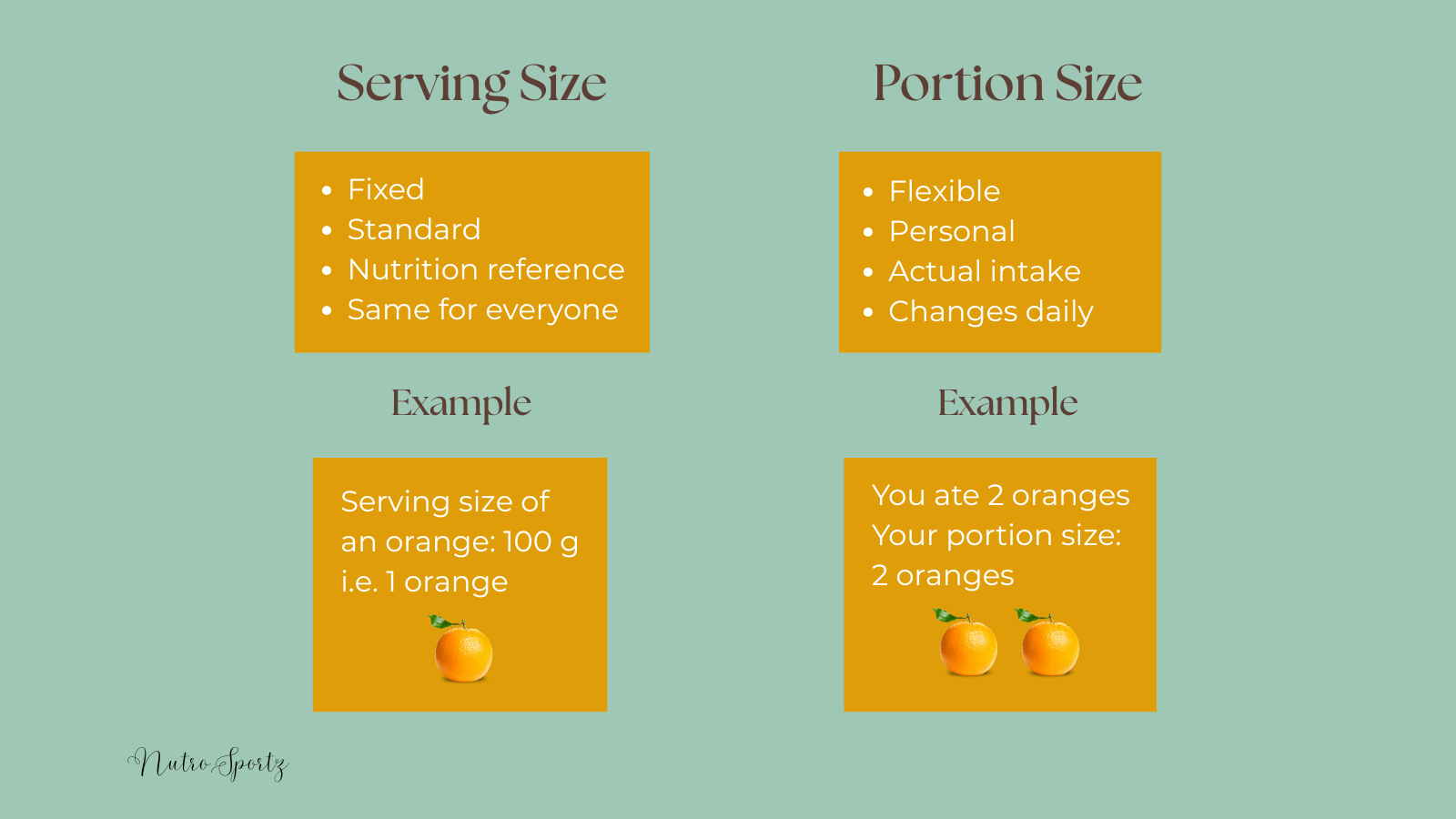
Key Takeaway: Serving & serving size help you understand food, while portion size reflects how much you eat.
Why does understanding these terms matter?
This helps you:
- Read nutrition labels accurately
- Know how many servings you are actually eating
- Adjust portions based on activity level
- Make mindful choices without restriction or confusion
Practical Ways to Portion Your Food
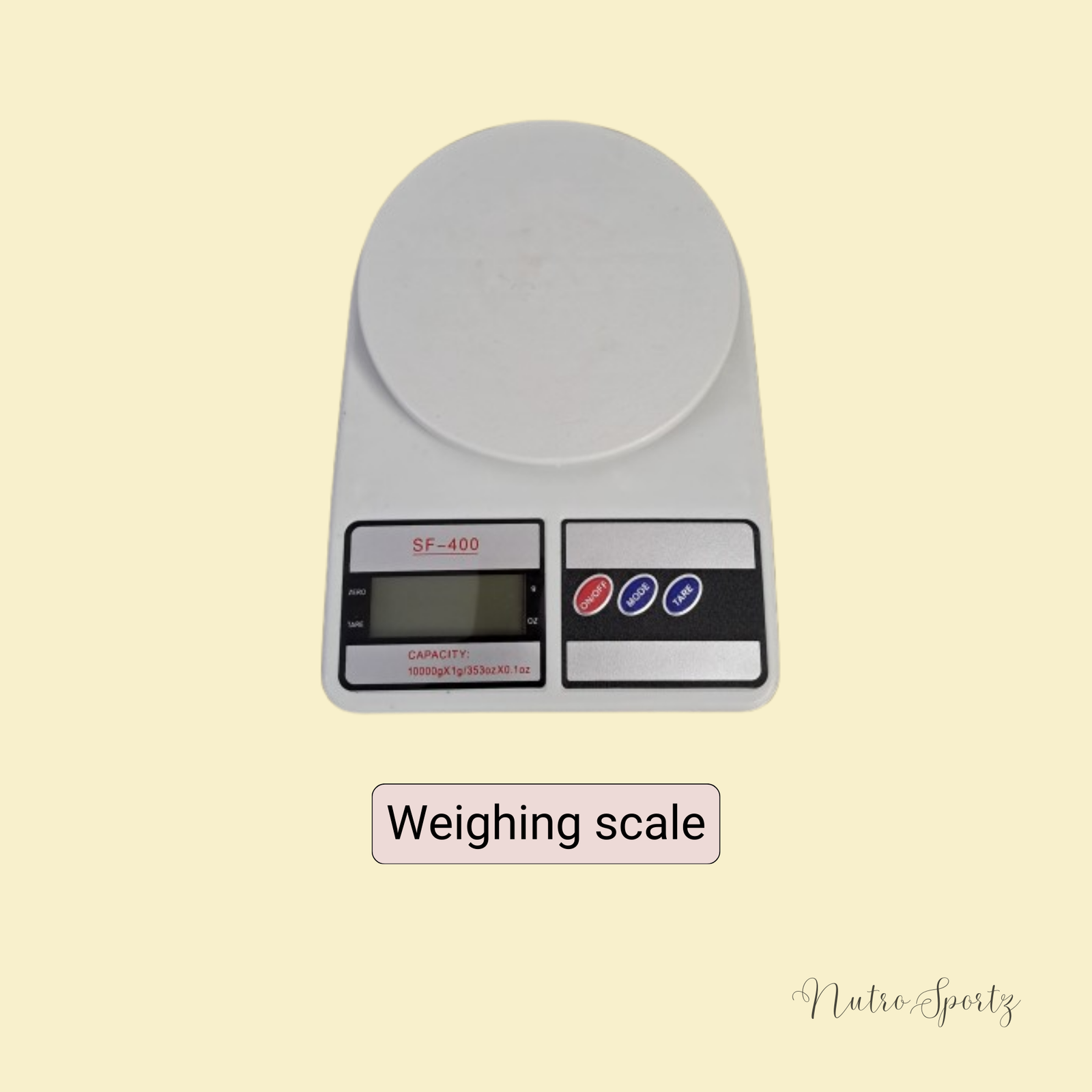
1. Use a Food Scale
One of the most accurate ways to portion your food is by using a food scale. It helps you determine the exact weight of your portions, making it especially useful for tracking foods like fruits and vegetables.
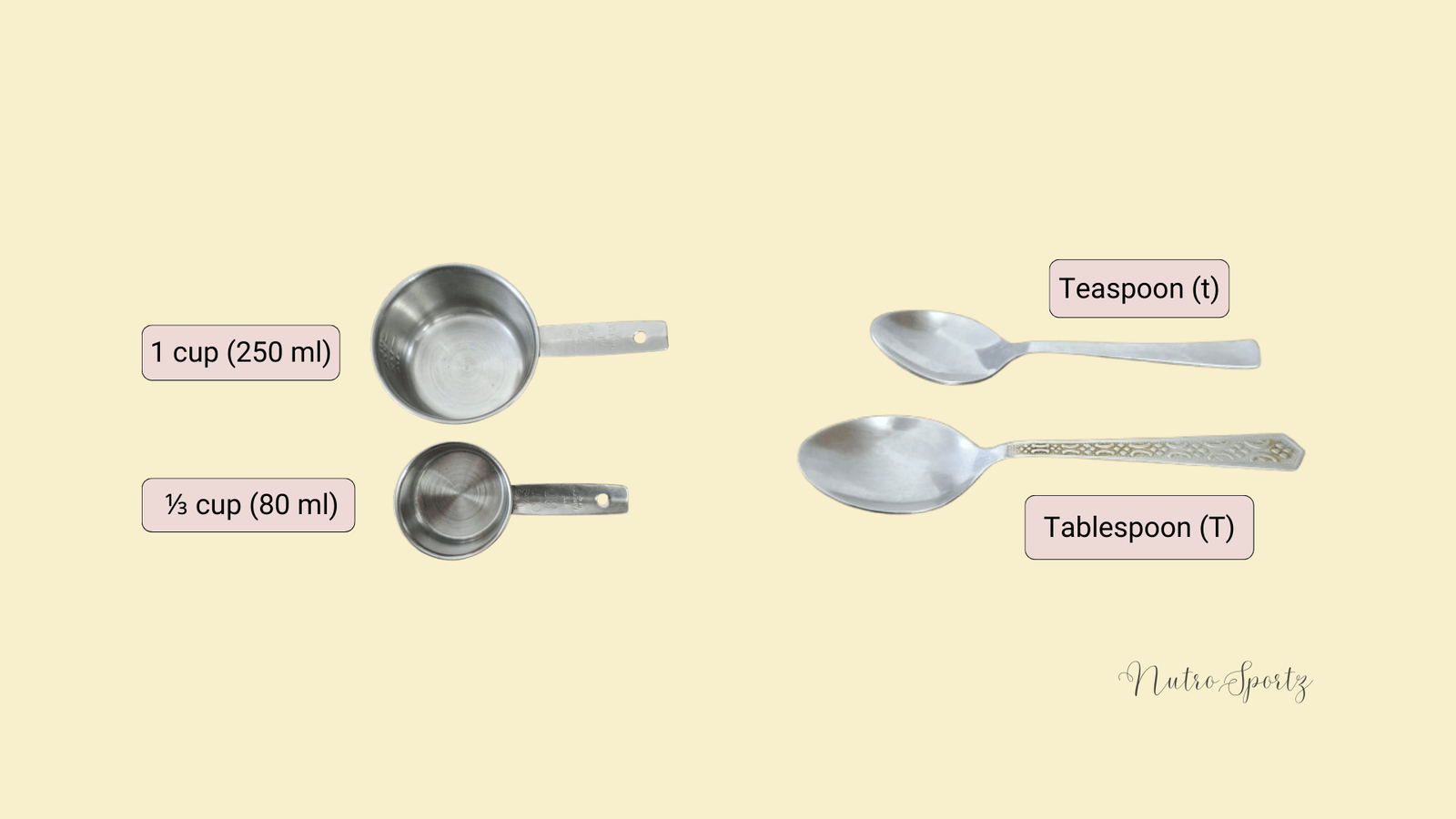
2. Use Measuring Cups and Spoons
Measuring cups and spoons are simple tools to estimate portion sizes quickly. For example, 1 cup of cooked rice provides approximately 30 grams of carbohydrates. They are especially helpful when you need a quick and fairly accurate method without weighing your food.
3. Read Nutrition Labels Smartly
Nutrition labels are a valuable guide for understanding portion sizes in packaged foods. Always check the nutrients per serving of food, then calculate the value for each nutrient based on how many servings you ate. Many packaged foods provide clear information, making it easier to calculate your intake.
Example of how to calculate the carbohydrate and protein content in one serving of packaged food
Now, let’s calculate how much carbohydrate and protein are in a single serving of packaged food. While some labels clearly show the nutrient content per serving, others don’t. If you ever find yourself in this situation, don’t worry! Just follow the steps in the image below to get the carbohydrate and protein values in no time.

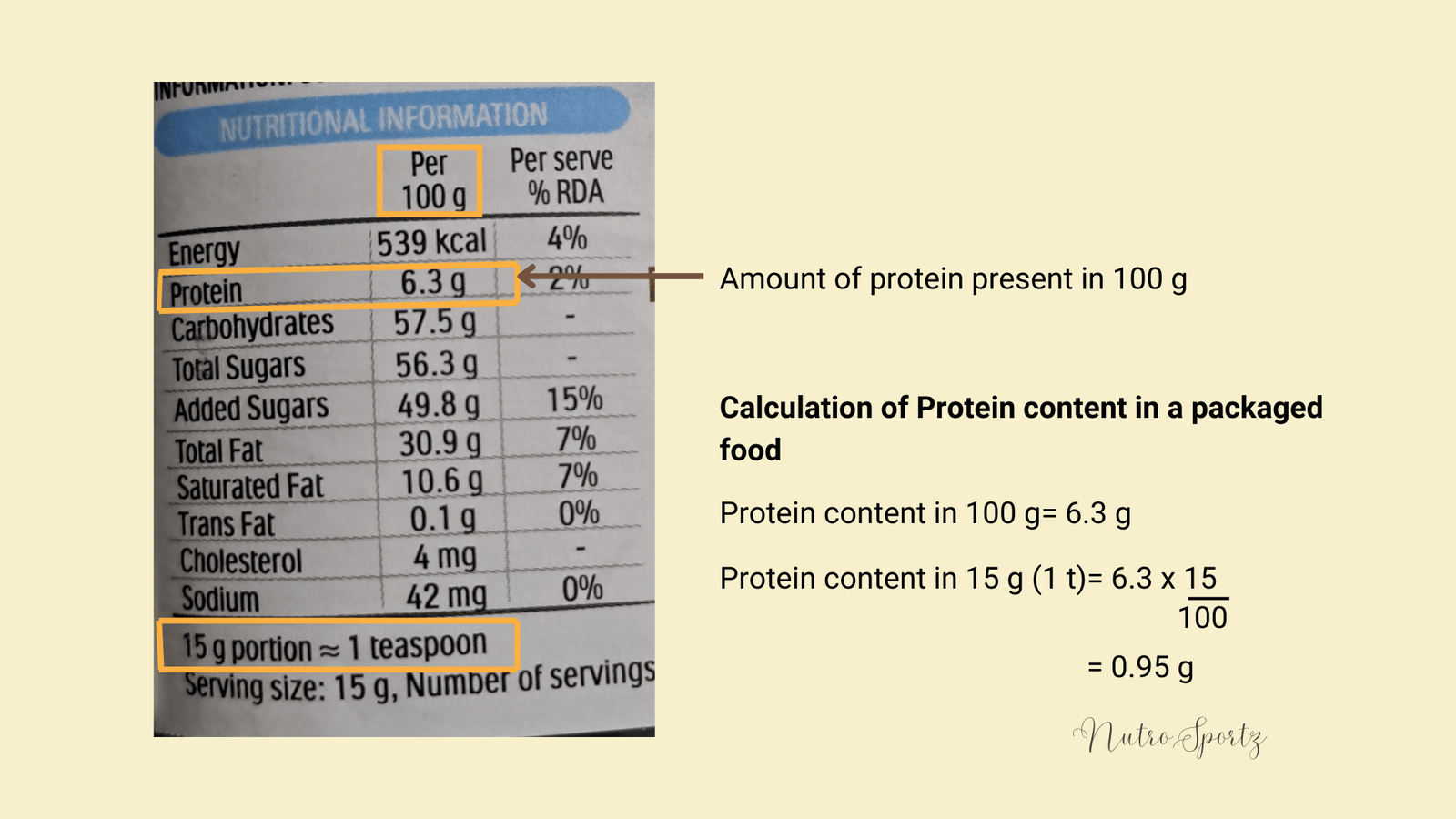
Remember: Your portion size may not always match the serving size- being aware of this is key to better nutrition choices.
Final Thoughts
Understanding the difference between serving, serving size, and portion size helps you read labels correctly, plan meals better, and eat with clarity instead of confusion. These simple concepts make nutrition practical and flexible for everyday life.
Want to know what one serving of fruit looks like? Check my post: “One Serving Of Fruit: A Simple Visual Guide“.
Check out my posts to learn how to portion your food for 30 g carbs and 10 g protein: “How to Portion Your Food to Get 30 Grams of Carbohydrates” and “Know How To Get 10 Grams Of Protein From Foods“
frequently asked questions
What is a serving in nutrition?
A serving is a standard reference amount of food used to estimate calories and nutrients like carbohydrates, protein, fats, vitamins, and minerals.
Are serving and serving size the same?
No, they are not. The term serving size explains how much food equals one serving, while the serving size indicates the number of grams that make up one serving.
What is portion size?
Portion size is the amount of food you actually eat. It can be smaller, equal to, or larger than one serving.
Can my portion size be different from serving size?
Yes. For example, if 1 serving = 100 g and you eat 50 g, your portion size is ½ serving.
How are serving sizes decided?
Serving sizes are defined in dietary guidelines for different food groups and may vary by country. They are also used on food labels to standardize nutrient information.
How can I measure my portion size accurately?
You can use: a food weighing scale (most accurate); measuring cups and spoons; and nutrition labels on packaged foods.
Why do athletes need to understand portion sizes?
Athletes need precise nutrition for performance, recovery, and body composition. Knowing portion sizes helps them match intake with training demands.
Does 1 serving mean 1 person?
One serving has a different meaning in different contexts. According to the Dietary Guidelines, it refers to the amount of food (raw) used to estimate the number of calories and nutrients. In recipes, it could mean how many people the recipe serves or how much food the recipe makes.
References
- ICMR-NIN Expert Committee (2011). Dietary guidelines for Indians. ICMR – National Institute of Nutrition.
- https://www.eatforhealth.gov.au/food-essentials/how-much-do-we-need-each-day/what-serve
- https://www.eatright.org/health/wellness/nutrition-panels-and-food-labels/serving-size-vs-portion-size-is-there-a-difference
Time to wrap up
Did this post change how you look at nutrition labels or portions? Share your thoughts in the comments below.