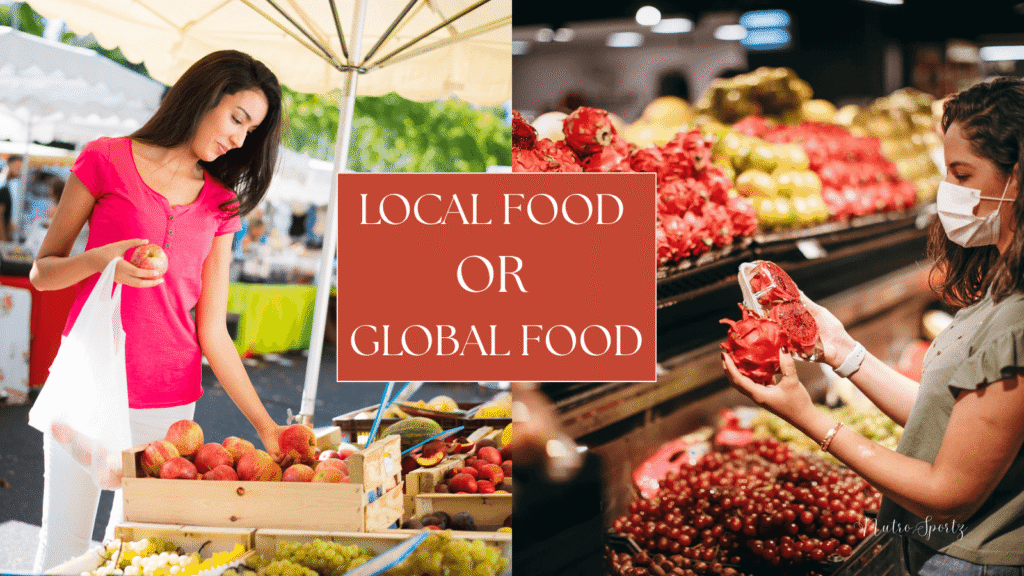

Walk into any supermarket or even your local market, and you will see quinoa, chia seeds, blueberries, avocados, and many other foods sourced from different parts of the world. At the same time, the same market is filled with traditional local foods that have nourished communities for generations.
The rising popularity of imported foods, produced by social media trends and aggressive marketing, has created confusion among people.
Do you find yourself standing in the farmer’s market, looking at vegetables and thinking, “Should I buy cauliflower or broccoli?” So how do you decide between the two- local food or global food?
In this post, you will learn:
- The benefits of choosing local food
- When global foods actually make sense
- How to create a balanced and practical approach
Let’s break it down clearly and logically.
Table of Contents
Understanding Local Food and Global Food
Before deciding between the two- local food or global food, let’s understand what these terms actually mean.
Local Food
Local food refers to food grown or produced close to where you live. It could be food:
- From your backyard
- Within 100 miles
- Within the same district or state
Global Food
Global food refers to foods that are imported from other countries or regions far from where you live. These foods may be nutritious, but they often travel long distances before reaching your plate.
Why the Debate Exists?

There is an ongoing debate about whether local food or global food is the better choice. This discussion continues for several reasons:
- Health claims
- Sustainability concerns
- Affordability
- Changing dietary trends
Local food as a foundation
Choosing local food as the base of your diet makes sense for several reasons.
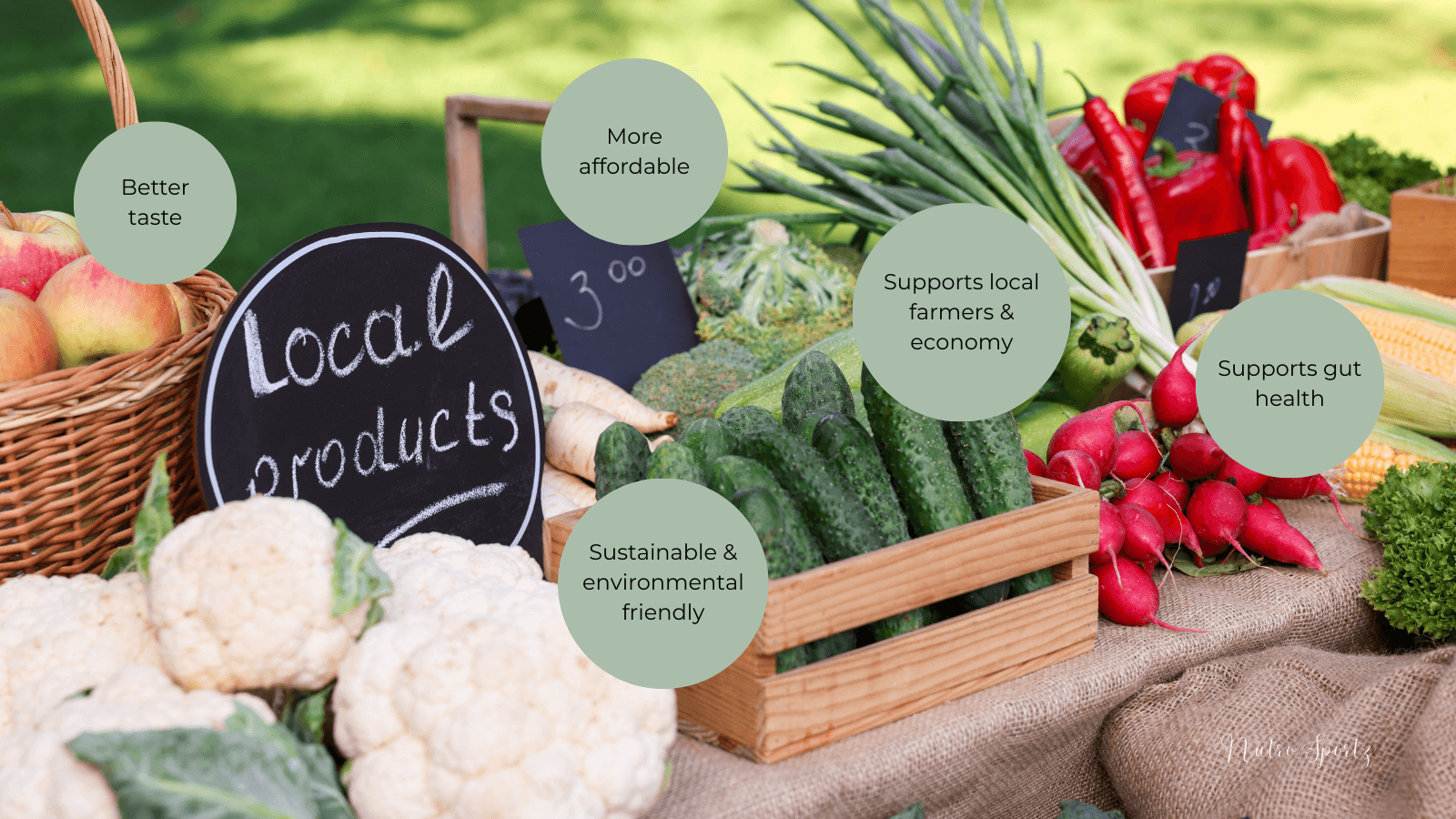
1. Higher Nutrient Retention
Local foods are typically fresher. Farmers often harvest produce the day before the market, sometimes even the same morning.
Because local food:
- Travels shorter distances
- Spends less time in storage
- Requires fewer preservation methods
…it is more likely to retain its peak freshness and nutrient content.
2. Supports Gut Health
Local food often involves:
- Less processing
- Fewer preservatives
And this can support a healthier gut microbiome.
3. Sustainable and Environment-Friendly
Local foods usually travel shorter distances from farm to plate. This means:
- Lower transportation emissions
- Reduced fuel use
- Smaller carbon footprint
Let’s consider an example:
Imagine two apples.
- One apple was grown 400 miles away and transported by truck to your local farmer’s market.
- The other was grown halfway across the world, stored in a shipping container, transported by ship or plane, and then delivered by truck to your city.
The international apple carries a significantly larger carbon footprint due to the energy required for transportation and storage.

4. Supports Local Farmers and Economy
When you buy local food:
- More of your money goes directly to farmers
- You support small-scale agriculture
- You strengthen your local economy
5. affordable
Local food is often cheaper when purchased in season because the supply is abundant.
Imported foods include: transportation costs, import taxes, and premium branding charges. These factors increase the final price.
6. Better Taste
Fresher food tastes better, which may lead to:
- Greater meal satisfaction
- More mindful eating habits
Key Takeaway: The closer you are to where the food was grown, the better it is likely to be.
As an athlete, how can eating local food help you?
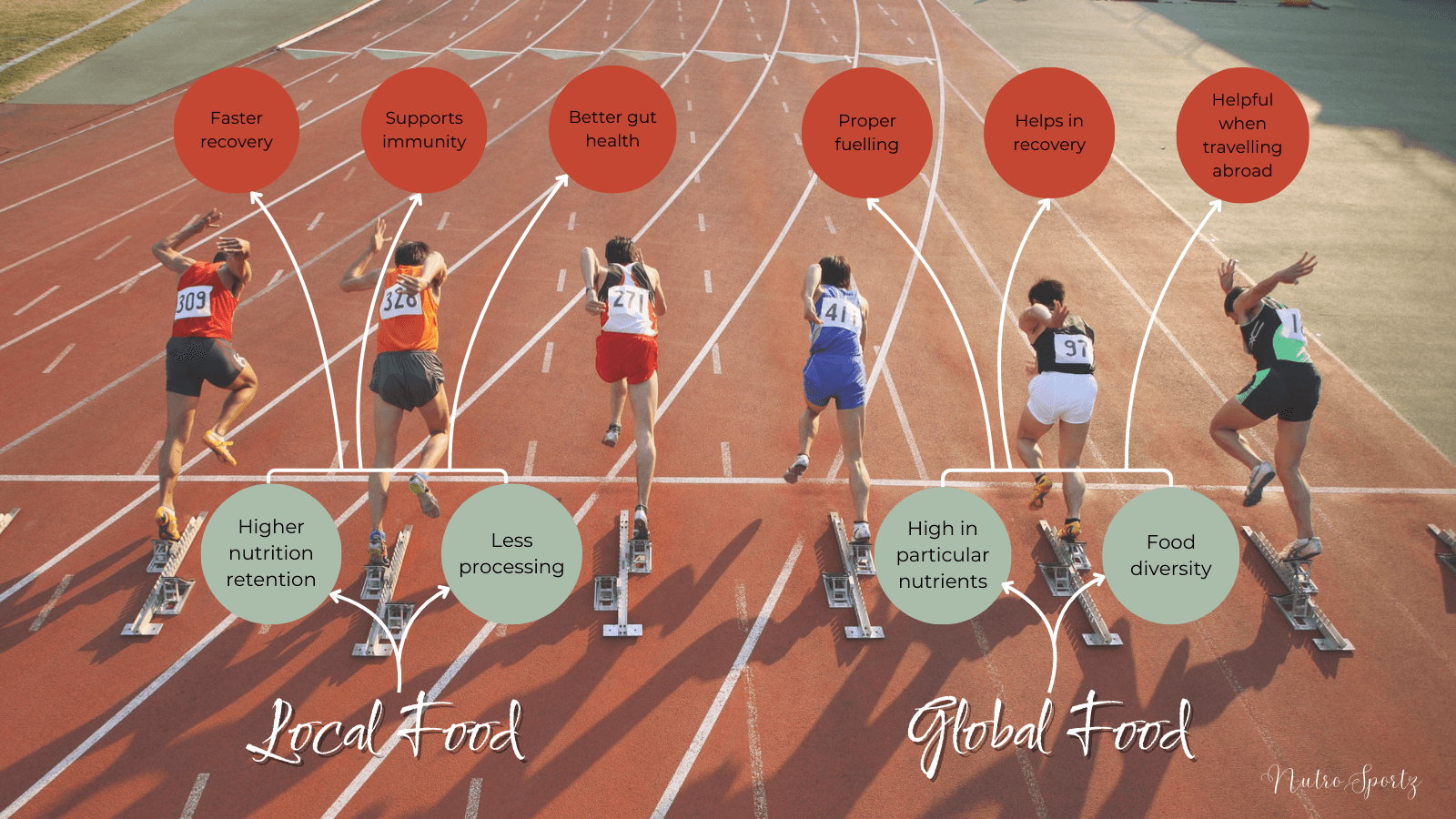
Because of better nutrient retention and less processing, local food can help you perform better by:
- Supporting faster recovery
- Strengthening immunity
- Supporting gut health
Why You Should Not Limit Yourself to Local Food Only?
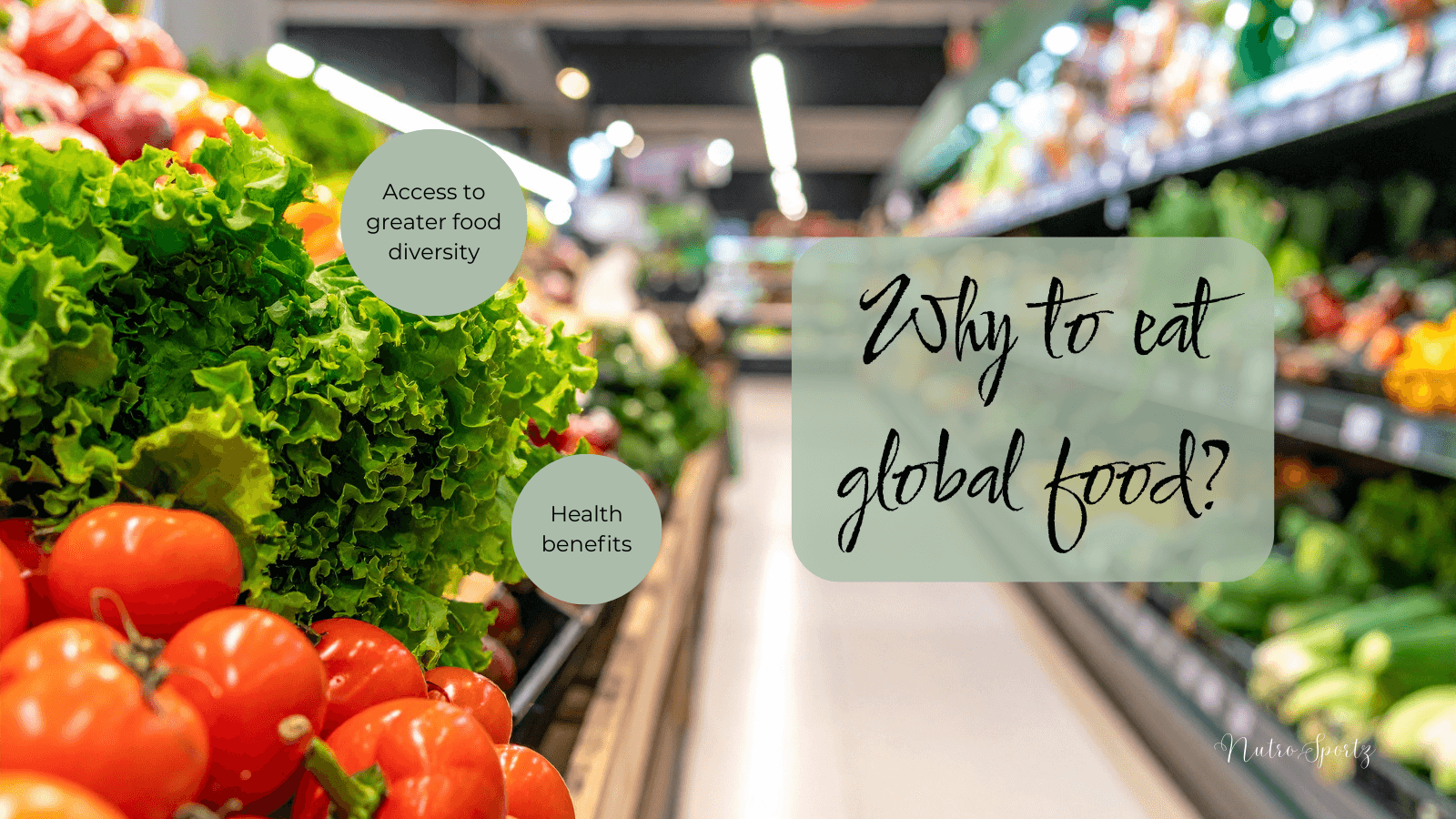
While local food should form the base of your diet, completely rejecting global foods may not be ideal. It may help in achieving greater food diversity.
And, greater food diversity may lead to:
- Expanded nutrient intake
- Health benefits
Some global foods have strong research backing for their health benefits.
For example:
- Studies have shown the beneficial effects of cherries in conditions like gout and arthritis.
- Research also suggests that it may support cardiovascular health.
Why, as an athlete, do you need global food?
You may require global food, as the food might be:
- Higher in particular nutrients
Example: Quinoa is a vegetarian source of complete protein, containing all essential amino acids.
- Contain specific recovery nutrients
Research suggests that tart cherry juice may:
- Reduce pain
- Decrease inflammation and oxidative stress
- Promote faster recovery
- Also, if you travel internationally for competitions, it may be beneficial to be accustomed to global foods. Familiarity can help you fuel properly when local options differ.
Key Takeaway: Global foods may effectively support your health and performance goals.
The Ideal Approach: Local First, Global When Beneficial
Instead of choosing strictly between local food and global food, use a structured and balanced approach.
- Base daily meals on local produce
- Include global foods when:
- They serve a specific health and performance purpose
- For food diversity
Key Takeaway: Healthy eating should be flexible, not rigid.

Final thought
The debate between local food and global food does not require an extreme answer. It is a personal choice. The smartest choice is not restriction- it’s an informed balance.
frequently asked questions
What is a local food?
Local food refers to food grown close to where you live. It could be food from your backyard, within 100 miles, or within the same district or state.
What is the difference between local food and global food?
Local food is grown or produced near where you live, while global food is imported from distant regions or countries and travels longer distances before reaching you.
Why is local food considered more nutritious?
Local food typically: has less storage time; undergoes fewer preservation processes; and has more nutrient retention.
Is local food more sustainable?
Yes, in most cases. Local food has less transportation distance, fuel use, and overall carbon footprint, making it more environmentally friendly.
Why is local food often more affordable?
When in season, local food is cheaper because it avoids import costs like transportation, storage, and taxes.
Should athletes only eat local food?
No. While local food should form the foundation of your diet, including global foods can improve nutrient diversity and support specific performance needs.
What are the benefits of including global foods in your diet?
Global foods can provide: unique nutrients not easily available locally; greater food diversity; and specific performance or recovery benefits.
How to balance local and global foods?
A practical approach is to prioritize local foods for daily meals and include global foods when they offer specific health or performance benefits.
Why is food diversity important for athletes?
Greater food diversity helps ensure a wider intake of essential nutrients, which supports overall health, performance, and recovery. Also, if you travel internationally for competitions, it may be beneficial to be accustomed to global foods.
References
- Food love family. 1st edition. A practical guide to child nutrition. Maya Adam. 2016. Cognella academic publishing. USA.
- Vitale, K. C., Hueglin, Shawn; Broad, Elizabeth. (2017). Tart Cherry Juice in Athletes: A Literature Review and Commentary. Current Sports Medicine Reports 16(4), 230-239. DOI: 10.1249/JSR.0000000000000385
- Santos, H. O., Genario, R., Gomes, G. K., & Schoenfeld, B. J. (2021). Cherry intake as a dietary strategy in sport and diseases: a review of clinical applicability and mechanisms of action. Critical Reviews in Food Science and Nutrition, 61(3), 417–430. https://doi.org/10.1080/10408398.2020.1734912
time to wrap up
What is your take on the debate around local food or global food? Do you prefer sticking to seasonal local options, or do you enjoy global foods?
Share your thoughts and experiences in the comments below. Your perspective might help someone else make a smarter, more balanced choice.